
Analysis and experimentation of ecosystems newsletter, December 2020
Foreword by Michel Boër, AnaEE DG
Dear readers,
2020, the year of the coronavirus outbreak and the global sanitary crisis, is coming to its end and should be considered as a wake-up call. As pointed in the last IPBES report, prevention is better than cure; critical knowledge gaps have to be closed, such as “the understanding of the relationship between ecosystem degradation and restoration, and the risk of emergence of pandemics”, or “the impact of climate change and related extreme weather events”. Thanks to its experimental approach, AnaEE can be a major contributor to this research.
On a more positive note, 2020 has been also a critical year for our implementation activities: we have answered to the ESFRI questionnaire to become a landmark on the European Research Infrastructure 2021 roadmap, and finalized our application for the ERIC, with the approval of the statutes and of the last version of the Scientific and Technical Document. Recently, we organized the first AnaEE webinar, part of the AgroEco2020 conference (see report below). The difficulties experienced this year did not prevent us to prepare our infrastructure towards operationality.
2021 will be a year rich in events, with the last steps for the landmark label and for the ERIC, and, moreover, the first call for proposals to use our European infrastructure. AnaEE, with its service centres, will also organize training activities and workshops. In 2021, the first calls for the new Horizon Europe program will be released, and we should prepare outstanding applications that, first, will enable the research community around AnaEE to perform cutting edge research, and, second, will bring sustainability and visibility to our infrastructure.
I wish you all a merry Christmas and a great end of year vacation, while keeping safe from the Covid.
AnaEE on the path to become an ERIC and a European
Landmark
On October 29th, the interim Assembly of Members (AoM) of AnaEE met in videoconferencing. Several important decisions were taken, as the approval of the 2021-2022 work program and of the overall Scientific and Technical Document to be sent to the European Commission as part of the ERIC Step 2 package. The STD is an important strategic document that describes the infrastructure and its business model, and presents its scientific priorities.
In this document, AnaEE has identified key scientific priorities that actively support the European Green Deal strategy:
- Plant health and ecosystem functioning
- Greenhouse gas emissions in ecosystems, especially in agriculture
- Ecosystem carbon storage
The Ministry of Higher Education, Research and Innovation of the host country (France) prepares now the formal application for the ERIC status to be sent shortly to the European Commission. A period of 6 months is expected to complete the procedure.
AnaEE in the ENVRI community and ENVRI-FAIR
AnaEE is one of the RI contributing to the ESFRI Cluster of Environmental Research Infrastructures (ENVRI) which aims at identifying common issues and at developing integrated and shared solutions in environmental research.

The ongoing ENVRI-FAIR project (2019 -2022) is the connection of ENVRI to the European Open Science Cloud (EOSC). The solutions prototyped in the previous ENVRI-plus project (2015 -2019) are deployed for, data/metadata and services interoperability and for the feeding of the EOSC portal.
The participating RIs cover the different domains of the Earth system: Atmosphere, Marine, Solid Earth and Biodiversity / Ecosystems.
The ENVRI-FAIR organisation consists in cross-cutting WorkPackages (WPs) about project management, communication, policy, training, common requirements, implementation technical solutions and 4 domain specific WPs. AnaEE, which is represented by the CREA (Italy), CNRS and INRAE (France), is part of the “Biodiversity and Ecosystem domain” (Figure 1) together with eLTER, LifeWatch and ICOS.
AnaEE mainly contributes to the development of technical and semantic interoperability and is involved in interoperability use-cases such as “the description of sites for experimentation or observation” and “the soil water content”.
The ongoing implementation of the AnaEE RI benefits from this participation in ENVRI-FAIR, particularly for the establishment of the Data and Modeling Centre and the services it will host. Engineers in charge of the identification and integration of provenance metadata elements in the characterization of AnaEE resources (data and services), as well as the implementation of semantic modeling and deployment pipelines for standardized data sets and metadata records, have been hired, thanks to the support provided by the EC through ENVRI-FAIR.
A look back at the AgroECO conference and AnaEE day
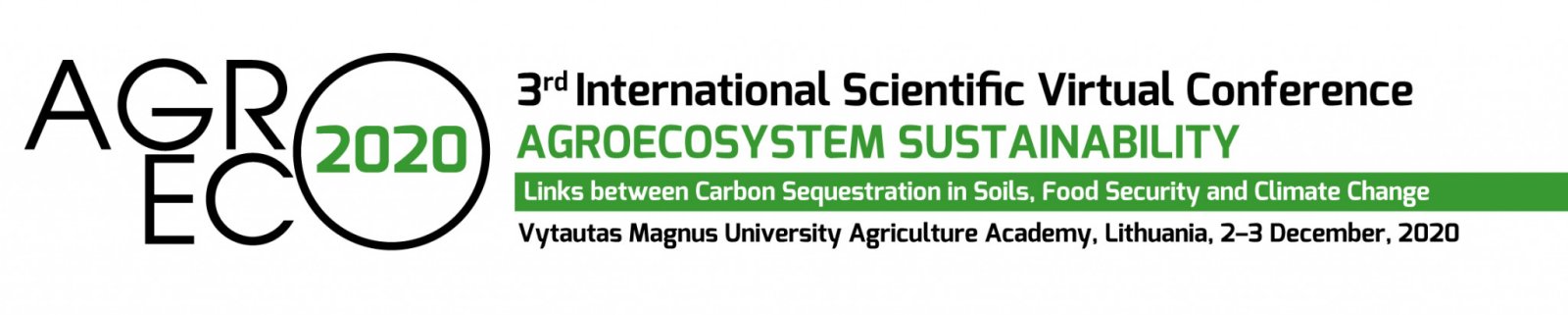
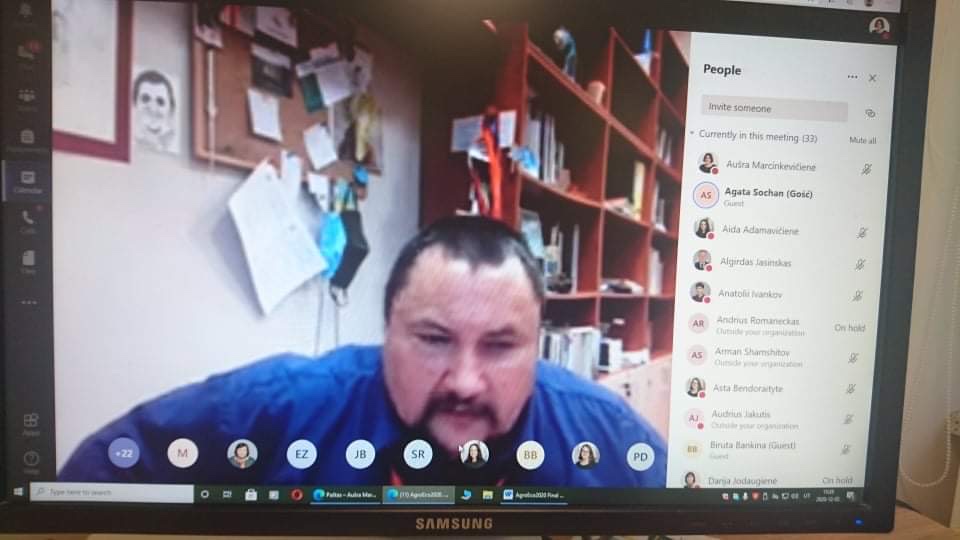
The Vytautas Magnus University, Agriculture Academy, Lithuania, and the Lithuanian Academy of Sciences, organized the 2nd and 3rd December the AgroEco2020 conference featuring the 1st AnaEE webinar. The event gathered about 200 participants from several countries in the world, and it was a great success.
Aušra Blinstrubienė, Vytautas Magnus University Agriculture Academy, Lithuania and Zenonas Dabkevičius, Lithuanian Academy of Sciences opened the event by recalling that international cooperation is key to strengthen knowledge and research. The first day a plenary session was followed by three parallel thematic sessions.
Cees Veerman, Chairperson of the board of the Mission for Soil Health and Food of Horizon Europe, and former Minister for Agriculture of the Netherland, opened the plenary session. He highlighted the critical EU objective of 75% of healthy soils by 2030, and the need for the collaboration between academia and the society to reach this objective. He emphasized the role of living labs as a tool to gather both researchers and farmers, in a co-creation approach. Michel Boër, DG of AnaEE, presented an overall review of AnaEE, its objectives, its strategy, and the specificity of the approach to forecast the future of ecosystems, and the impact of the infrastructure on agriculture, industry, and the society at large, notably within an evidence-based policy approach.
During the plenary, participants discussed about agroecology, the BIOEAST initiative, precision agriculture, environmental management, the influence of organic production on bioactive substances in food product, circular bioeconomy. The three parallels sessions tackled soil health and C sequestration for sustainability, food quality and safety, soil and crop management towards a chemical pesticide-free agriculture, the role of circular bioeconomy in climate change mitigation, biodiversity, crop and production diversification, precision farming and digital technologies.
The second day of the conference was dedicated to AnaEE. It was the occasion to share an overview of the services currently under development. Web services such as the AnaEE website, the proposal portal and SEISM application were presented as well as funding opportunities. The representatives of Services Centres gave out presentations about the missions and stages of development of the Data and Modelling Centre, the Technological Centre and the Interface and Synthesis Centre. It was also the opportunity to show the role of AnaEE in ENVRI-Fair; as an example, AnaEE Denmark presented its method for the FAIRification of data acquired at Danish platforms. These presentations were followed by a focus on the unique features of Ecotrons in AnaEE, and of the FATI-Platform in Belgium. Finally, the collaborative approach in Finland was presented, with a national infrastructure that manages together the three local nodes of AnaEE, ICOS and eLTER.
Our Lithuanian partners presented their rich landscape of facilities, with presentations of the various types of platforms they propose: analytical, enclosed, forestry, aquacosm, agro-ecosystem, plant phenotyping.
AnaEE warmly thanks the Lithuanian organizers for holding this conference, and thanks all participants to this very successful event. We look forward seeing you all to the next events organized by AnaEE.
AnaEE day presentations are available here.
The result of the virtual hackaton HACK AgriFood’20 – prototypes of a local food supply chain created
4th year students of Administration of Rural Development Study Program at Faculty of Bioeconomic Development of VMU Agriculture Academy Alex Yirenkyi Akuffo, Mulolo Ngasa Gracia Donido, Johnson Segun John, Ndukwu Ifeanyi Harrison, Ohaegbu Paul Nnamdi together with Prof. Dr. V. Atkočiūnienė enjoy the results of 6 weeks of work at the international online hackathon HACK AgriFood’20.
The team solved the issue of how to promote and support the demand for local products through environmentally friendly short food supply chains, bringing producers and consumers closer to each other. The developed solution is a prototype of a short local food supply chain. HackAgriFood 2020 was participated with the developed prototype.
The solution is based on the short local food supply chain designed to bring local food producers and consumers closer to each other through communication links and convenient forms of cooperation. Demand for fresh, seasonal, locally grown and produced food has been increasing recently and will increase in the future. Local food producers lack innovative distribution channels; the issue of reaching the end consumer, mostly living in the city, remains unsolved. Therefore innovatively organized short local food supply chains effectively create new market opportunities for producers and locally grown products of higher biological value are received by consumers.
International attention and insights on agro-ecosystems sustainability in Lithuania
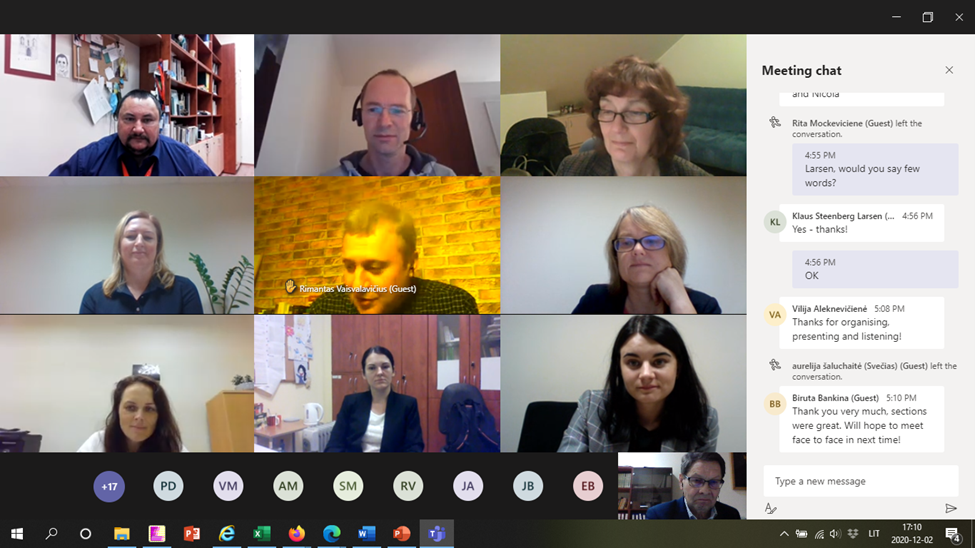
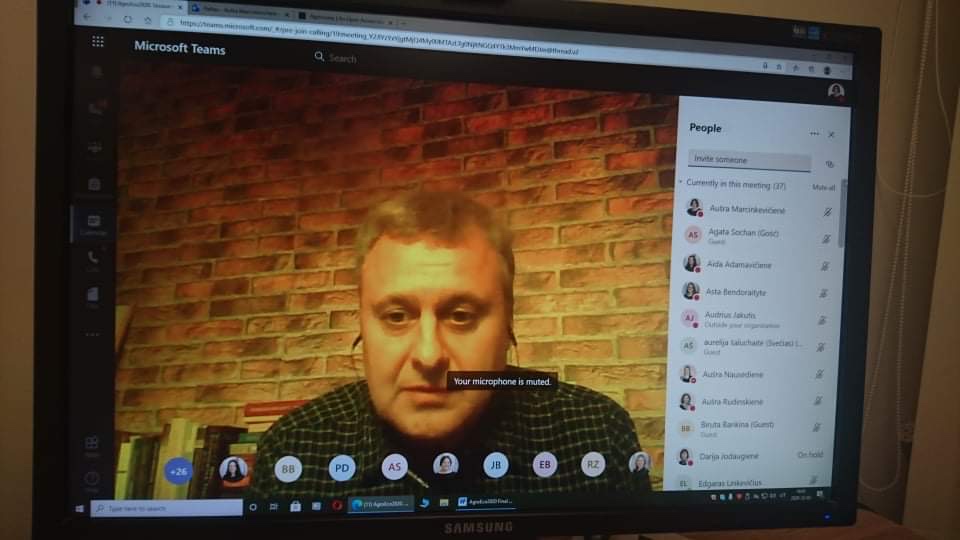
On 2-3rd December, 2020 was held the 3rd International Scientific Conference AgroEco2020: “Agroecosystem Sustainability: Links between Carbon Sequestration, Food Security and Climate Change” organized by Vytautas Magnus University (VMU) Agriculture Academy, Faculty of Agronomy. The conference was held virtually for the first time. The international research infrastructure consortium AnaEE also contributed to the organization of the conference. The conference was attended by about 200 participants from various countries: France, Poland, Latvia, Estonia, the Netherlands, Belgium, Hungary, India, Denmark and others.
The conference AgroEco2020 was opened by the VMU Agriculture Academy Dean of Agronomy Faculty prof. Aušra Blinstrubienė. Vice-President of Lithuanian Academy of Sciences prof. Zenonas Dabkevičius welcomed all participants of the conference.
The topics of the conference are closely related to the European Commission’s Mission area “Soil Health and Food”. The conference was attended by the Chairman of the Mission Board “Soil Health and Food” prof. Cees Veerman. He presented the Mission and the Board’s activities in plenary session. He has a wide experience as he is a former Dutch Minister of Agriculture, a professor at Wageningen University & Research, and also he is a farmer. Assoc. prof. dr. Zita Kriaučiūnienė from VMU Agriculture Academy, Faculty of Agronomy, Institute of Agroecosystems and Soil Sciences is also a member of Mission Soil Health and Food Board.
The second plenary presentation was about the research infrastructure AnaEE (Analysis and Experimentation on Ecosystems), presented by Michel Boer, Head of this infrastructure. VMU Academy of Agriculture together with the Lithuanian Agriculture and Forestry Sciences Center (LAMMC) seeks to join this international infrastructure and its project activities. Later in the conference was presented BIOEAST initiative, in which the VMU Academy of Agriculture and its researchers are already participating as partners together with other Central and Eastern European countries, on common agro-ecological problems and insights into sustainable farming. Prof. Abdul M. Mouazen from the University of Ghent (Belgium) presented research on precision agriculture. Active cooperation with this professor has been going on for several years and in 2021 a joint international project will be launched. The famous researcher of allelopathy research prof. Inderjit from the University of Delhi (India) had presentation about weeds in agroecosystems. Professors from Poland presented two more plenary presentations: prof. Ewelina Hallmann on bioactive food components, and prof. Renata Marks-Bielska on the circular bioeconomy in the food chain.
For the rest of the day, oral presentations were presented in three parallel sections. A total of 31 oral presentations were made on the following topics: soil health and carbon sequestration for sustainability; soil and crop management to reduce chemicals in agriculture; biodiversity, crop and product diversification; precision agriculture and digital technologies; food quality and safety; the role of the circular bioeconomy in climate change mitigation.
The conference poster presentations, of which there were 41, and the conference abstract book were published on the Internet.
The second day of the conference was dedicated to the presentation of AnaEE international research infrastructure and its services. During it prof. Algirdas Augustaitis, prof. Arvydas Povilaitis, prof. Vaclovas Bogužas, assoc. prof. Zita Kriaučiūnienė presented agro-, forest- and aquatic ecosystem research infrastructures, laboratory equipment and research and project activities in VMU Agriculture Academy, and the director of LAMMC dr. Gintaras Brazauskas in the Lithuanian Agriculture and Forestry Sciences Center.
Communication with foreign partners is very important to increase the awareness and quality of research. The conference, even in a pandemic, took place and was successful. It is hoped that the experience gained by organizing an international scientific conference virtually will be useful in the future, but wishing that at the AgroEco2022 conference we would have the opportunity to meet live in our nice academic campus and in a wonderful country – Lithuania!
AgroEco2020 organizers:
Assoc. prof. Zita Kriaučiūnienė and prof. Vaclovas Bogužas


AGROECO 2020 3rd International Scientific Virtual Conference
The 3rd International Scientific Virtual Conference “AGROECO 2020” will be held online on 2-3 th of December, 2020. The conference is organised by Faculty of Agronomy of Vytautas Magnus University Agriculture Academy.
Conference programme and connections.
AGROECO 2020 3rd International Scientific Virtual Conference
 The 3dr international scientific virtual conference “AGROECO 2020” will be held online on 2-3 th of December, 2020. The conference is organised by Faculty of Agronomy of Vytautas Magnus University Agriculture Academy.
Conference programme and connections.
Europe’s eyes are on Lithuania: the International AgriFood Forum 2020 is being organized
Agriculture is approaching the breaking point: the European Green Deal, the reform of the Common Agricultural Policy, the ongoing process of digitalization and the world’s response to the COVID-19 pandemic crisis will fundamentally change the perception of productivity, sustainability and technology in the agri-food industry. The main trends in the sector will be discussed in detail at the International AgriFood Forum 2020, which will take place remotely on 26-27 November. The event is designed for business, decision makers, farmers and anyone interested in the prospects in this area. Participation in the forum is free of charge, but due to the limited number of people who can join, pre-registration is required.
The organizers of the event – the AgriFood Lithuania DIH and the European Parliament (EP) Liaison Office in Lithuania – emphasize that decisions made today will determine the long-term future of agricultural and food industry. “At the end of October, the European Parliament voted in favor of making the agricultural policy of the EU more flexible, sustainable and resilient to crises. MEPs will seek to ensure that a significant proportion of support is dedicated to combating climate change and ensuring biodiversity. In the past, The European Parliament has advocated solutions that reduce the use of fertilizers and antibiotics in food the production and shorten the food supply chain. In the near future, the funds of the Economic Recovery Fund should reach Europe. These funds can become the basis for the transformation towards a more sustainable agriculture and food production,” Daiva Jakaitė, the Head of the EP Liaison Office in Lithuania, explained.
According to Kristina Šermukšnytė-Alešiūnienė, the Managing Director of the AgriFood Lithuania DIH, the pandemic has brought many changes and Europe has to respond urgently. Digital transformation proposed by the European Commission has become a key response to the crisis, which will make countries and businesses, determined enough to seize this opportunity, more sustainable and stronger than ever before.
Speakers of the forum – leaders from all over Europe
Today, the topic of the AgriFood Forum 2020 is more relevant than ever before. A great proof of this is the list of speakers, which consist of leading European and Lithuanian experts, politicians, entrepreneurs and decision-makers from the European Commission. It includes Members of the European Parliament Juozas Olekas, Bronis Ropė and Petros Kokkalis, the President of the Lithuanian Confederation of Industrialists Vidmantas Janulevičius, the Director of the EIT Food Consortium Marja-Liisa Meurice, the President of the European Clusters Alliance Antonio Novo Guerrero, the Managing Partner of the Iron Wolf Capital Venture Capital Fund Kasparas Jurgelionis, CEOs of Agrokoncernas, Dojus Agro, Scandagra Baltic and many others. The full list of speakers is available on the official forum website.
According to Grigoris Chatzikostas, one of the moderators of the AgriFood Forum 2020 and the co-pioneer of Digital Innovation Hubs in Europe, COVID-19 tested the resilience of our food systems but it also accelerated the adoption of game-changing technologies. G. Chatzikostas believes that this forum is a meeting space where different actors of food ecosystems – farmers, technology developers, entrepreneurs, food chain suppliers, decision-makers and consumers – can reach an agreement, make decisions and take actions in order to transform the agri-food sector and create a greener, more sustainable and prosperous future.
Focus on Europe and Lithuania
The AgriFood Forum 2020 will take place on 26-27 November. The first day of the event will focus on decisions and strategies of the EU, and on the second day the future of the Lithuanian agri-food industry will be in the spotlight. The number of people who can join is limited, so those wishing to participate are encouraged to register in advance.
This forum is a continuation of the International Agro Business Forum held in Vilnius City Hall in 2019, during which a memorandum was signed. The purpose of the Memorandum was to promote further cooperation between different actors of the agri-food ecosystem, to form an infrastructure supporting the development of digital innovations in Lithuania and to ensure the necessary funding. All of these goals have been successfully achieved.
Registration for the online regional hackathon HACK AgriFood’20 has started
AgriFood Lithuania DIH, together with international partners, has announced the beginning of registration for the regional online two-day hackathon HACK AgriFood’20, which will take place on November 21-22, 2020. Participants will be able to choose from 18 unique challenges, divided into 6 different categories, that the agri-food sector is facing today.
During the two-day hackathon innovators from Lithuania and neighboring countries will:
- get mentorship and guidance from experts at the top of their fields;
- have the opportunity to pitch their ideas during the international AgriFood Forum 2020;
- compete for a solid cash prize;
- be invited to participate in unique interactive entertainments.
Anyone interested can join HACK AgriFood’20 at www.hackagrifood. Registration for the hakathon will be open until November 18.
Challenge categories: Fighting food loss and food waste; Crisis-averse horticulture; Mitigating labor shortage; Smart animal husbandry; Side-stream valorization; Boosting local production.

Competition for Erasmus+ Studies for the Spring Semester
VMU International Cooperation Department invites students to participate in the additional competition for Erasmus+ studies for the Spring semester academic year 2020/2021!
If you want to gain even more international study experience, improve your foreign language skills, become a VMU Ambassador and a part of even bigger international community, participate in the competition and fill in the online application form on https://epasirasymas.vdu.lt -> Outgoing-Application for Erasmus Study Exchange (EU countries) until October 18th (23:59), 2020.
Lists of the partner institutions: EVF / GMF / HMF / IF / KTF / MA / MF / PMDF / SMF / TF / ŠA KAUNAS / ŠA VILNIUS / ŽŪA
Eligible applicants are full time and part time students except 1st year bachelor degree student. Students with disabilities or special needs have an opportunity to receive additional funding.
The results of competition will be announced on October 28th on VMU website. Each selected student will also be informed personally by e-mail.
Additional information about Erasmus+ studies
Competition for Exchange Studies at Partner Countries
Students are invited to participate in a competition for one semester exchange studies at non-EU/EEA countries with Erasmus+ or VMU Mobility scholarship.
Students have to submit completed online application form (Application form for non-EU exchange studies (bilateral and Erasmus+ exchange)) until 18th of October, 2020.
Selection criteria:
- compatibility between the plan for studies or research at the Higher Education Institution abroad and the study programme at VMU;
- motivation;
- results of studies or research during the last two semesters (for VMU Mobility scholarship GPA should be no less than 8.0);
- good knowledge of the language in which lectures will be taught.
Selected students will receive Erasmus+ or VMU Mobility scholarship.
Students will be personally informed via email about the results of first selection stage and invitation to second stage – interview.
Please note that possibility to go for exchange studies will depend on global situation of COVID-19 pandemic.
Students who wants to visit International Cooperation Department for consultation should contact the coordinator first and agree the time of the visit.
International scientific conference “Accounting and Finance: Innovative Solutions for Sustainable Bioeconomy and Rural Development”
The 12th international scientific conference “Accounting and Finance: Innovative Solutions for Sustainable Bioeconomy and Rural Development” will be held online on 19-20th of November, 2020. The conference is organised by Faculty of Bioeconomy Development of Vytautas Magnus University Agriculture Academy.
The conference is designed to discuss research ideas in area of accounting and finance and share research results that are relevant to business and public organisations operating in bioeconomy sector and rural areas. Our goal is to identify innovative sustainable development and appropriate solutions, in order to increase business sustainability bioeconomy and efficiency, to promote partnership of small and medium-sized enterprises and public sector.
- About
- About Agri-Food BM programme
- Academic infrastructure units
- All events
- All news
- Aquaculture center
- Archives
- Biosystems Engineering
- Center of Animal husbandry selections, breeding values and dissemination
- Centre of Biosystems Engineering, Biomass Energetics and Water Engineering
- Circular Biobased Economy
- Climate change
- Contacts
- Contacts
- Events
- Events archive
- Faculties
- For business and society
- Innovative products
- International Cooperation
- International projects
- Joint Research Centre of Agriculture and Forestry
- Journal “Human and Nature Safety”
- Laboratory of Technology Safety
- Laboratory services
- Living Environment
- More labs
- News
- Project
- QUALS project description
- Research
- Research areas
- Scientific events
- Scope
- Sitemap
- Studies
- Study programmes
- Technology Transfer & Commercialization
- THE ROLE OF ORGANISATION IN THE PROJECT
- THE ROLE OF ORGANISATION IN THE PROJECT
- THE ROLE OF ORGANISATION IN THE PROJECT
- The Study Process
- Žemės ūkio žinių ir inovacijų sistemos klasteris