
English Course at Executive Training Institute in Malta
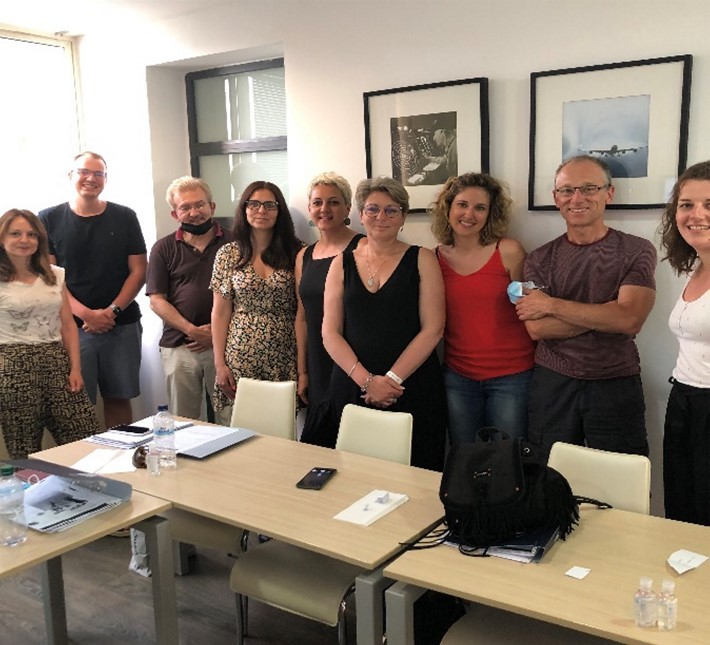
On 30 May – 03 June, 2022 assoc. prof. dr. Jurgita Kulaitienė, lecturer dr. Nijolė Vaitkevičienė and lecturer dr. Dovilė Levickienė of the Department of Plant Biology and Food Sciences from Vytautas Magnus University (VDU) Agriculture Academy, Faculty of Agronomy, were participating at the English course “Fluency and Language Development for Education Staff” according to the ERASMUS+ programme. The course was held at the Executive Training Institute in Malta.
In these courses, teaching and administrative staff from different countries (France, Italy, Germany, Switzerland, Lithuania, Czech Republic, Latvia, Poland and Austria) were attended.
With this training visit, teachers had the opportunity to work on language and fluency development. Sessions involved short lectures, specific learning tasks, group work, vocabulary building, grammar review and pronunciation exercises. Were placed with the right class and level to increase competence in the English language. As well as the visit has given an opportunity to get know their history, culture and people.
VMU Agriculture Academy Community Gained Knowledge from Foreign Teachers During the International Staff Week of the ERASMUS+ exchange Programme
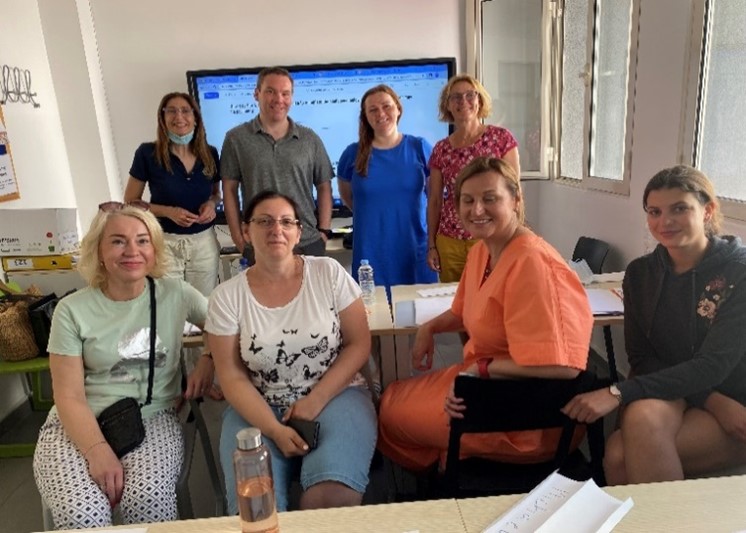
The International Staff Week under the ERASMUS+ programme took place on May 2-6 at the Vytautas Magnus University (VMU) Agriculture Academy. 15 scientists from 8 countries got acquainted with the Academy, gave lectures to the community of VMU Agriculture Academy and participated in various activities with the colleagues.
Two foreign lecturers visited the Department of Plant Biology and Food Sciences of the Faculty of Agronomy – assoc. prof. dr. Ajla Ališah from the university of Sarajevo and prof. dr. Ewa Czarniecka-Skubina from the Warsaw University of Life Sciences. Visiting lecturers gave lectures and discussed topical issues to 2nd-4th year students of the first cycle study programme Food Quality and Safety. Scientist A. Ališah presented the results of her ongoing research during the presentation “Hygienic, health-technological and economic aspects for the quality prevention of broiler chicken”, and scientist E. Czarniecka-Skubina presented a lecture on the topic: “Development of new food packaging”.
“The researchers answered the questions of students and invited them to take the opportunity to come to the universities of life sciences in Sarajevo and Warsaw for study and practice under the ERASMUS+ programme. The guests were happy to communicate and share their scientific experience with the Dean of the Faculty of Agronomy, the staff of the Department and doctoral students. During the visit the possibilities of cooperation in scientific and project activities were discussed”, – prof. dr. Elvyra Jarienė and assoc. prof. dr. Judita Černiauskienė summed up the visit of foreign lecturers.
During The International Staff Week of the ERASMUS+ programme two foreign lecturers – prof. Romeo A. Gomez and assoc. dr. Olesea Cojocaru – visited the Department of Agroecosystems and Soil Sciences. Visiting scientists gave lectures to 2nd year students of the Agronomy programme and to the 1st year students of the Food Quality and Safety programme. The lecture on the topic “Biologically active soil health – the basis of organic farming” was given to the community of VMU Agriculture Academy by dr. O. Cojocaru Prof. dr. R. Gomez shared his knowledge on the topic “Traditional rice-based ecosystems (TRBEs) in Ifugao and Benguet, Philippines”. The lecturer from the State Agrarian University of Moldova dr. Mr Cojocaru gave a presentation on “Soil resources in the Republic of Moldova”, and prof. dr. R. A. Gomez from the Benguet State University in Philippines introduced the report on topic “Environmental and Sustainability Issues in Traditional Rice-Based Ecosystems (TRBEs)”.
“I am glad that in addition to lectures and other centrally organized activities of the university, the invited lecturers had the opportunity to have a warm and businesslike conversation with the Dean of the Faculty of Agronomy assoc. prof. dr. Aida Adamavičienė, as well as to discuss with many lecturers and researchers of the Department of Agroecosystems and Soil Sciences during the breaks between lectures. During these conversations, discussing the possibilities of future scientific cooperation, the idea to acquaint the guests with the possibilities of the VMU Agriculture Academy Test Station, with the research carried out here and the available equipment has arisen. This visit to VMU Agriculture Academy Test Station was organized and the guests were kindly supervised by assoc. prof. dr. Zita Kriaučiūnienė”, – said assoc. dr. Rimantas Vaisvalavičius.
Two scientists from Egypt – Mansoura University dr. Mohamed M. Awad and Cairo University dr. Sheriff Mehanny – visited the Department of Mechanical Energy and Biotechnology of the Faculty of Engineering. Dr. M. M. Awad gave the lecture to the community of VMU Agriculture Academy on the topic “Modeling of Two-Phase Frictional Presure Gradient in Refrigeration and Air Conditioning Systems”, and dr. Sh. Mehany introduced the lecture on topic “Biocomposites & Nanocellulose”.
The Faculty of Engineering, Department of Water Engineering was visited by two foreign lecturers – Warsaw University of Life Sciences (SGGW), Faculty of Civil and Environmental Engineering, Director of the Water Center doc. dr. hab. Wojciech Sas and doctoral student Justyna Dzięcioł.
The invited teachers had the opportunity to participate in the opening event of ERASMUS+ International Staff Week and listened to the traditional national songs of all Lithuanian regions, learned the peculiarities of Lithuanian folk dances “Oira oira…”, tasted Lithuanian food and drinks.
Invited scientists gave lectures on “Problems of anthropogenic materials – soils in geoenvironmental engineering”, “Problems of waste management used in civil engineering in the aspect of product Life Cycle Monitoring”. W. Sas presented the scientific activities of SGGW Faculty of Civil and Environmental Engineering, Water Center to the staff of the Department of Water Engineering, and discussed the possibilities of cooperation. Doctoral student Justyna Dzięcioł went on a trip to Vilnius organized by VMU, both invited lecturers also visited cognitive objects in Kaunas.
Besnik Krasniqi, the researcher from the University of Pristina, visited the Faculty of Bioeconomy Development. The scientist gave the lecture on topic “Research Methodology” to the students of the Business Logistics programme. After the lecture, the members of the scientific community together with the Dean of the Faculty of Bioeconomy Development doc. dr. Bernardas Vaznonis discussed general possibilities of cooperation in science and studies. The lecturer from the Palze Birzeit University in Mohabad Abu Rjailah also visited the Faculty of Bioeconomical Development.
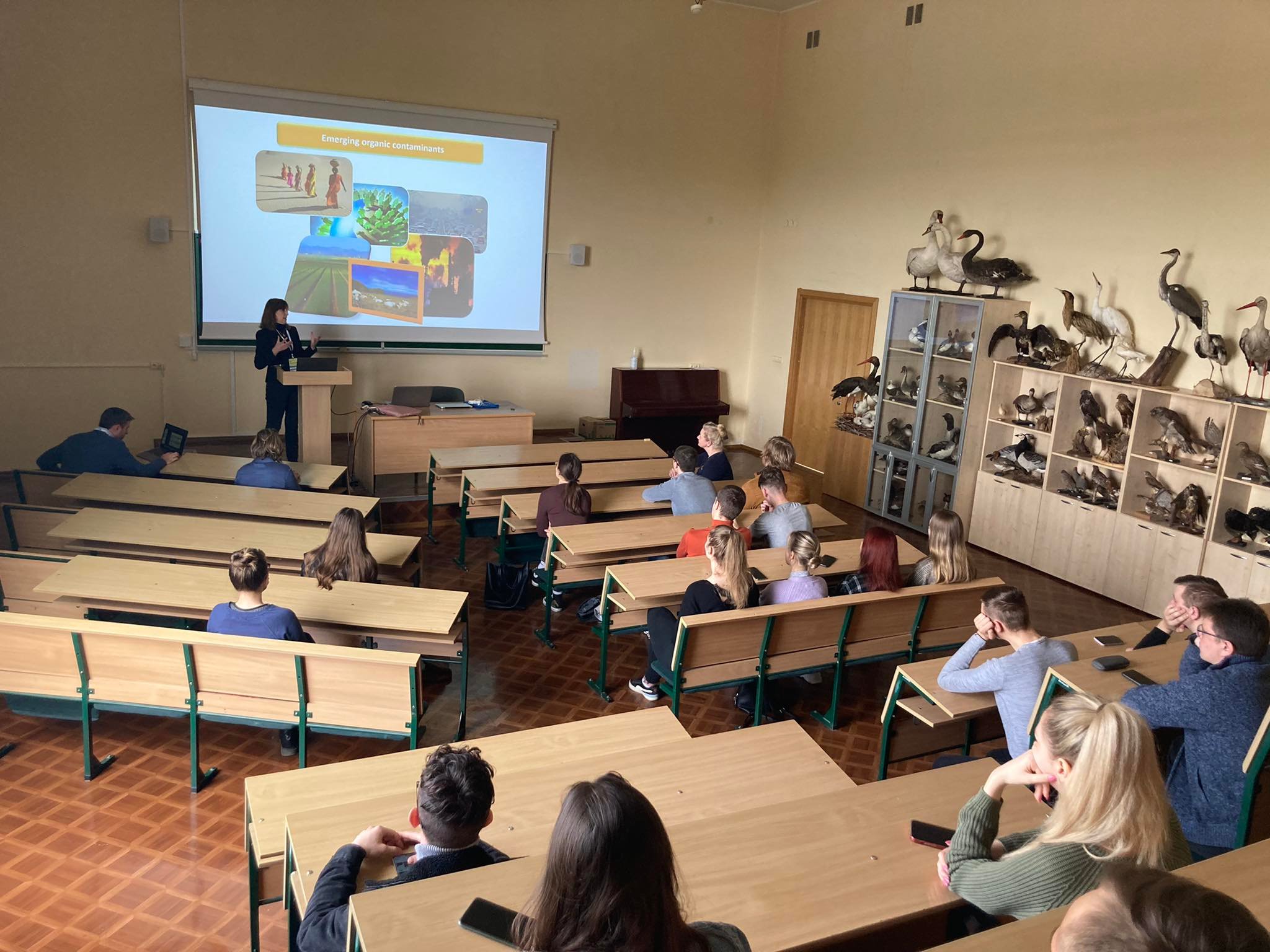
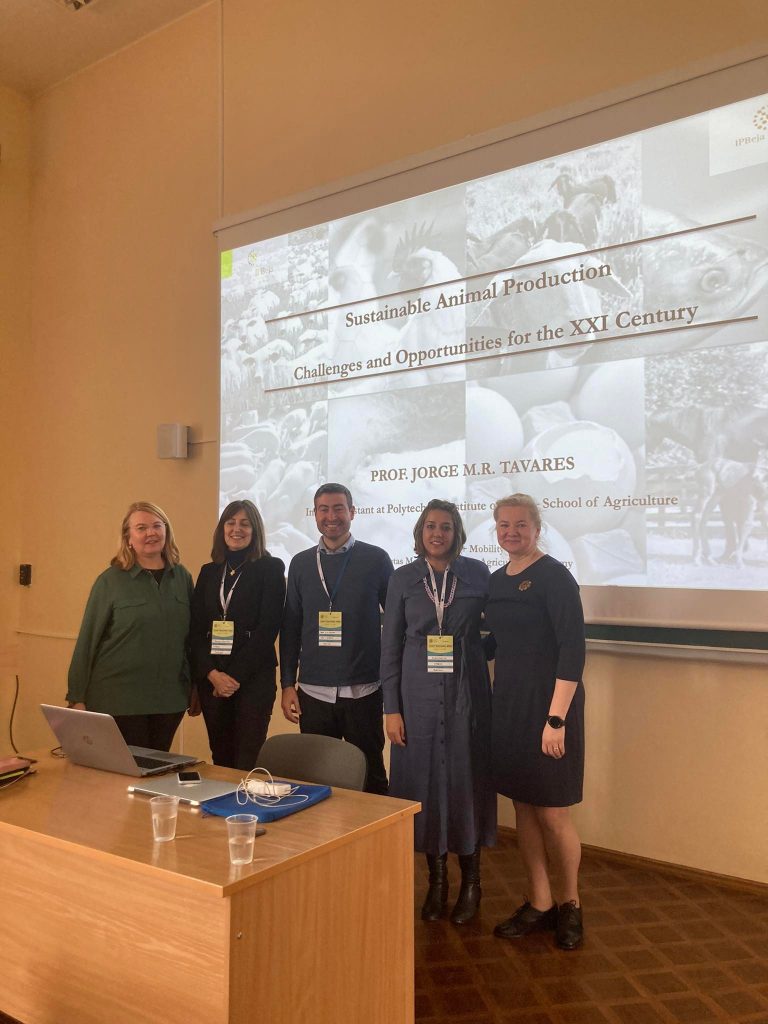
Three researchers from Portugal visited the Faculty of Forests and Ecology during The International Staff Week of the ERASMUS+ programme. Jorge Manuel Rodrigues Tavares, the researcher from the Beja Polytechnic School of Agriculture, presented the report on topic “Sustainable animal production.” Scientist Flávia Matias Oliveira da Silva gave the lecture on topic “Use of phytoremediation to remove pharmaceutical compounds in constructed wetlands”. Researcher Maria Teresa Borralho Marques dos Carvalhos shared knowledge with the VMU Agriculture Academy community on the topic “Emergent organic contaminants in water: advanced oxidation processes (AOPs) treatments for recalcitrant compounds”.




For students – an idea competition and a summer camp in Italy!
We invite students to take the opportunity to take part in a competition of ideas and, if successful, to take part in a summer camp in Italy with colleagues from all over Europe. More information.
Lectures by Visiting Professor Ewa Czarniecka-Skubina
Ewa Czarniecka-Skubina is a scientific researcher at the Institute of Human Nutrition Sciences of the Warsaw University of Life Sciences (WULS-SGGW). She holds academic degrees and the title of professor of agricultural sciences in the discipline of food technology and nutrition. Her research area focuses on food production, new technologies, catering technology, food quality, food safety, human nutrition, food product development, as well as consumer behavior, especially in foodservice. She is the author of numerous articles in scientific journals and books.
At the Faculty of Agronomy in Vytautas Magnus University lectures will be held online, using “MS Teams” platform. Those who are intending to participate, with pleasure are inviting to joint here.
Course’s themes: “Novel plant food” and “Chemical safety of plant raw materials”
| Date | Topics | Time |
| March 21 (Monday) | Trends in the development of new products on the food market (type of new products, innovative food products, pro-healthy and functional products) | 11.55-13.25 |
| March 22 (Tuesday) | Trends in the development of new products in foodservice (molecular cuisine, Note by Note). ” | 11.55-13.25
|
| March 24
(Thursday) |
Plant substitute in food products (steviol glycosides, xylitol, amaranthus, ß-glucans, bioactive components, superfoods etc.) part 1. | 8.45-10.20
|
| April 04 (Monday) | Plant substitute in food products (steviol glycosides, xylitol, amaranthus, ß-glucans, bioactive components, superfoods etc. and vegan products) part 2. | 11.55-13.25
|
| April 05 (Tuesday) | The process of designing and implementing new food products | 10.20-11.55 |
| April 08 (Friday) | Development of new food packaging | 13.10-14.40 |
For more information, please contact prof. dr. Elvyra Jariene e-mail: elvyra.jariene@vdu.lt

English Course at Barcelona, Spain
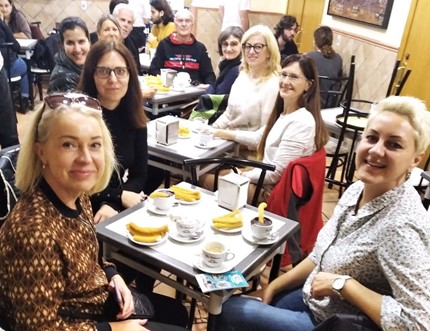
On 08 – 12 November, 2021 assoc. prof. dr. Jurgita Kulaitienė, lecturer dr. Nijolė Vaitkevičienė and lecturer dr. Dovilė Levickienė of the Department of Plant Biology and Food Sciences from Vytautas Magnus University (VDU) Agriculture Academy, Faculty of Agronomy, were participating at the Staff Training Week- English Course at Barcelona, Spain.
In these courses, teaching and administrative staff from different countries (Poland, Czech Republic, Lithuania and Belgium) were attended.
With this Erasmus+ training visit teachers had the opportunity to work on oral communication skills in an authentic academic setting, attended courses in private language school in Barcelona. Sessions involved short lectures, specific learning tasks, group work, vocabulary building, and pronunciation exercises. Were placed with the right class and level to increase competence in the English language. As well as the visit has given an opportunity to get know their history, culture and people.
The Student Survey “Teaching and Learning Evaluation” is Underway
The University has launched the student survey Teaching and learning evaluation in 2021 autumn semester. In the end of each semester all the students of bachelor, master, integrated and professional studies are invited to share an opinion about teachers and their own work during the semester study courses. The survey is anonymous!
More information.
The visit in university of Palermo
Assoc. professor dr. Jurgita Kulaitienė and lecturer dr. Dovilė Levickienė (Institute of Agriculture and Food Science, Faculty of Agronomy) visited the University of Palermo (UNIPA) the Department of Agricultural, Food and Forest Sciences in Palermo, Italy on 15–17 June 2021 under the Erasmus+ staff mobility for training.
Teachers got acquainted with the Palermo higher education system, acquired knowledge and competence in area of modern analytical methods which are used to assess the storage and quality of the raw materials.
The visit has given an opportunity for exchanging the ideas on future education and research cooperation’s, improving the academic relations between relevant institutions of both universities in the academic and scientific field.

Agronomy faculty researches will participate in the International H2020 program project and will implement interdisciplinary, cross-sector and internationally relevant problems of soil fertility changes
In 2021 in April new international H2020 program Project HoliSoils “Forest Soils Research and Innovation Action – Holistic Management Practices, Modelling and Monitoring for European Forest Soils“ will be started. Vytautas Magnus University Agriculture Academy will participate in the Project together with researchers from other 19 countries (Finland, the Czech Republic, Sweden, Germany, Great Britain, Japan, France, Spain, the Netherlands, etc.). The project aims to exchange the new knowledge on soil assessment processes and assessment methods in order to address the long-term benefits of soil-related ecosystems and climate change policy strategies in line with the European Union strategic standards. Including the UN’s Agenda 2030 SDGs, the Paris Agreement of Climate Convention, the EU Bioeconomy Strategy, the EU’s LULUCF Regulation, the EU Forest Strategy (2018), and the European Green Deal. HoliSoils will develop a harmonised soil monitoring framework and identify and test soil management practices aiming to mitigate CC and sustain provision of various ecosystem services essential for human livelihoods and wellbeing.
The multidisciplinary consortium consists of universities and research institutes from across Europe, with leading expertise on soil analysis and databases, development of advanced analytical techniques, complex system modelling, digital soil mapping, soil ecology, disturbance ecology, forest and GHG inventories, social sciences, and communications. It also involves active engagement with diverse stakeholders, including forest owners and managers, industry actors, forest extension services, a certification body, forest and soil researchers, climate policy support and GHG inventory experts, and policymakers.
The following main activities will be carried out in order to implement the project objectives: (WP 1) Analysing soil properties & drivers of microbiological processes, (WP 2) Modelling dynamics of soil properties & element fluxes, (WP 3) Harmonised soil monitoring framework for an EU GHG inventory, (WP 4) Holistic sustainable soil & forest management strategies, (WP 5) Soil resilience & recovery capacity after natural disturbances, (WP 6) Forest soils under different management scenarios in Europe, (WP 7) Stakeholder engagement, dissemination, exploitation & communication (DEC).
Researchers at the VMU Agriculture Academy will be actively involved in all project activities, however, will focus on analysis of soil properties and microbiological processes, evaluation of soil GHG evaluation strategy, development of holistic sustainable soil and forest management strategy, dissemination, communication and harmonization of project results.
Project duration – 54 months.
The total Project budget is 10,035,592.50 EUR, the financing from the European Union funding – 9,999,920.00 EUR. The VMU Agriculture Academy budget is 93,125.00 EUR, the European Union funding – 86,875.00 EUR.
International attention and insights on agro-ecosystems sustainability in Lithuania
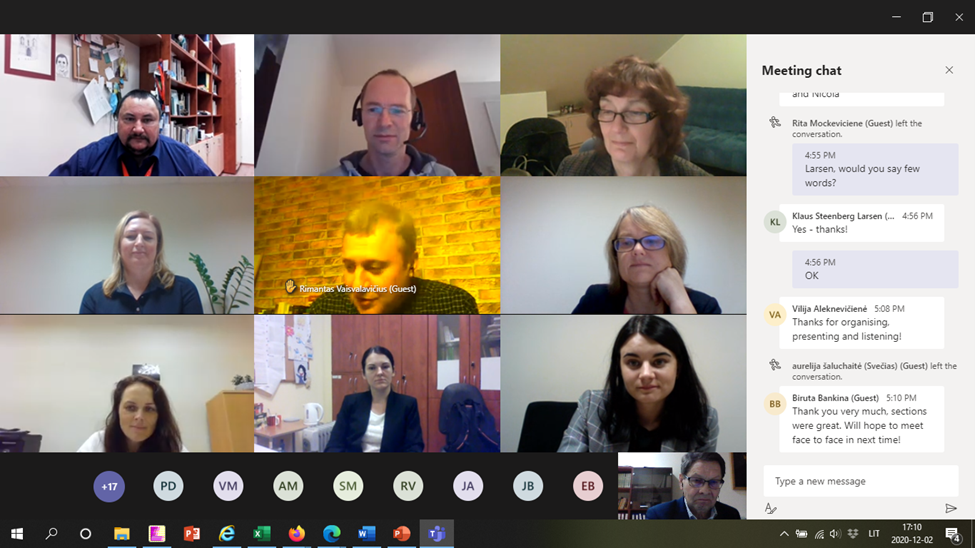
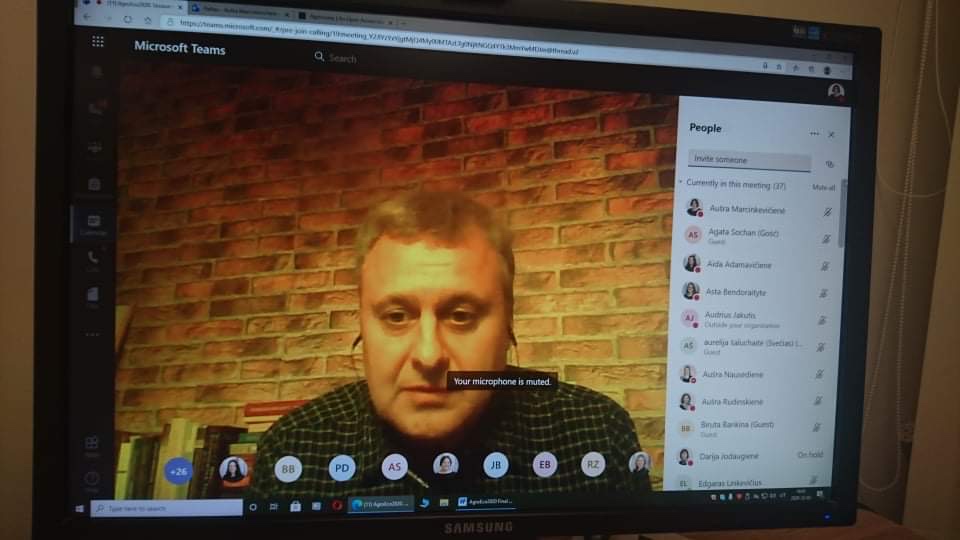
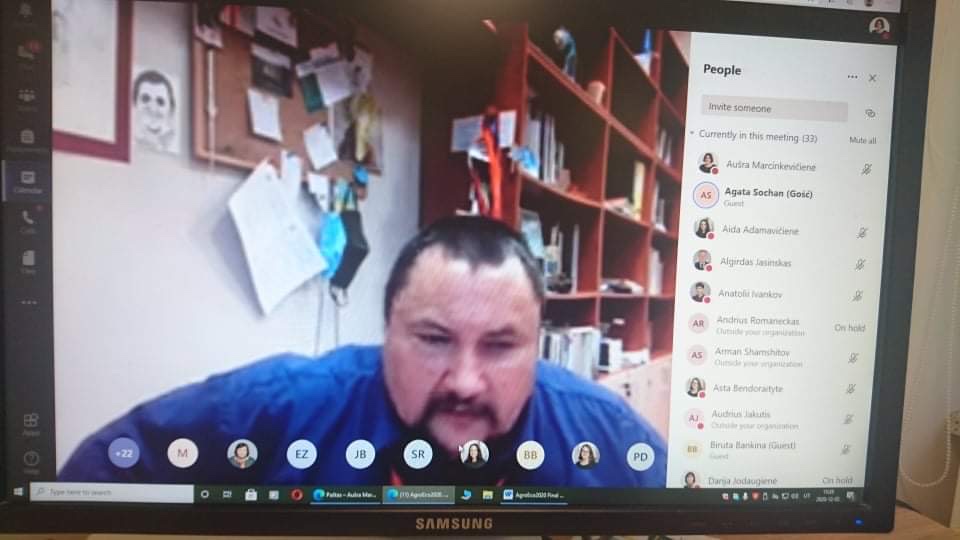
On 2-3rd December, 2020 was held the 3rd International Scientific Conference AgroEco2020: “Agroecosystem Sustainability: Links between Carbon Sequestration, Food Security and Climate Change” organized by Vytautas Magnus University (VMU) Agriculture Academy, Faculty of Agronomy. The conference was held virtually for the first time. The international research infrastructure consortium AnaEE also contributed to the organization of the conference. The conference was attended by about 200 participants from various countries: France, Poland, Latvia, Estonia, the Netherlands, Belgium, Hungary, India, Denmark and others.
The conference AgroEco2020 was opened by the VMU Agriculture Academy Dean of Agronomy Faculty prof. Aušra Blinstrubienė. Vice-President of Lithuanian Academy of Sciences prof. Zenonas Dabkevičius welcomed all participants of the conference.
The topics of the conference are closely related to the European Commission’s Mission area “Soil Health and Food”. The conference was attended by the Chairman of the Mission Board “Soil Health and Food” prof. Cees Veerman. He presented the Mission and the Board’s activities in plenary session. He has a wide experience as he is a former Dutch Minister of Agriculture, a professor at Wageningen University & Research, and also he is a farmer. Assoc. prof. dr. Zita Kriaučiūnienė from VMU Agriculture Academy, Faculty of Agronomy, Institute of Agroecosystems and Soil Sciences is also a member of Mission Soil Health and Food Board.
The second plenary presentation was about the research infrastructure AnaEE (Analysis and Experimentation on Ecosystems), presented by Michel Boer, Head of this infrastructure. VMU Academy of Agriculture together with the Lithuanian Agriculture and Forestry Sciences Center (LAMMC) seeks to join this international infrastructure and its project activities. Later in the conference was presented BIOEAST initiative, in which the VMU Academy of Agriculture and its researchers are already participating as partners together with other Central and Eastern European countries, on common agro-ecological problems and insights into sustainable farming. Prof. Abdul M. Mouazen from the University of Ghent (Belgium) presented research on precision agriculture. Active cooperation with this professor has been going on for several years and in 2021 a joint international project will be launched. The famous researcher of allelopathy research prof. Inderjit from the University of Delhi (India) had presentation about weeds in agroecosystems. Professors from Poland presented two more plenary presentations: prof. Ewelina Hallmann on bioactive food components, and prof. Renata Marks-Bielska on the circular bioeconomy in the food chain.
For the rest of the day, oral presentations were presented in three parallel sections. A total of 31 oral presentations were made on the following topics: soil health and carbon sequestration for sustainability; soil and crop management to reduce chemicals in agriculture; biodiversity, crop and product diversification; precision agriculture and digital technologies; food quality and safety; the role of the circular bioeconomy in climate change mitigation.
The conference poster presentations, of which there were 41, and the conference abstract book were published on the Internet.
The second day of the conference was dedicated to the presentation of AnaEE international research infrastructure and its services. During it prof. Algirdas Augustaitis, prof. Arvydas Povilaitis, prof. Vaclovas Bogužas, assoc. prof. Zita Kriaučiūnienė presented agro-, forest- and aquatic ecosystem research infrastructures, laboratory equipment and research and project activities in VMU Agriculture Academy, and the director of LAMMC dr. Gintaras Brazauskas in the Lithuanian Agriculture and Forestry Sciences Center.
Communication with foreign partners is very important to increase the awareness and quality of research. The conference, even in a pandemic, took place and was successful. It is hoped that the experience gained by organizing an international scientific conference virtually will be useful in the future, but wishing that at the AgroEco2022 conference we would have the opportunity to meet live in our nice academic campus and in a wonderful country – Lithuania!
AgroEco2020 organizers:
Assoc. prof. Zita Kriaučiūnienė and prof. Vaclovas Bogužas


Agrobiodiversity Summer School 2021
We invite students to register for the organized Summer School “Agrobiodiversity 2021”, which will take place in Switzerland in August 29 to September 8, 2021.
All the requirements that must be met in order to enter Switzerland for a short-term stay can be found at:
https://www.sem.admin.ch/sem/en/home/publiservice/weisungen-kreisschreiben/visa/liste1_staatsangehoerigkeit.html
All visa procedures remain the participant’s responsibility and must be arranged prior to arriving in Switzerland. Please note that you cannot apply for a student visa as a participant of the Summer School, as you will not be an officially enrolled student. For the visa application form please visit:
https://www.sem.admin.ch/sem/en/home/themen/einreise/visumantragsformular.html
Please return this application form until February 7th, 2021 to: gof.iunr@zhaw.ch
After sending us your application, you will receive a confirmation email. If you do not receive this within a couple of workdays, please check your junk mail folder or contact anna.geiser@zhaw.ch
- About
- About Agri-Food BM programme
- Academic infrastructure units
- All events
- All news
- Aquaculture center
- Archives
- Biosystems Engineering
- Center of Animal husbandry selections, breeding values and dissemination
- Centre of Biosystems Engineering, Biomass Energetics and Water Engineering
- Circular Biobased Economy
- Climate change
- Contacts
- Contacts
- Events
- Events archive
- Faculties
- For business and society
- Innovative products
- International Cooperation
- International projects
- Joint Research Centre of Agriculture and Forestry
- Journal “Human and Nature Safety”
- Laboratory of Technology Safety
- Laboratory services
- Living Environment
- More labs
- News
- Project
- QUALS project description
- Research
- Research areas
- Scientific events
- Scope
- Sitemap
- Studies
- Study programmes
- Technology Transfer & Commercialization
- THE ROLE OF ORGANISATION IN THE PROJECT
- THE ROLE OF ORGANISATION IN THE PROJECT
- THE ROLE OF ORGANISATION IN THE PROJECT
- The Study Process
- Žemės ūkio žinių ir inovacijų sistemos klasteris